
"Ecuador coffee facts"
400 article(s) found

A brief introduction to the Origin, Development, History and Culture of Ecuador's Fine Coffee beans with mild aroma
Galapagos Islands coffee is recognized as green natural coffee, because the Ecuadorian government has designated the islands as a national park, not only does it no longer allow the reclamation of new agricultural land, but also forbids the use of chemical fertilizers, pesticides, herbicides and other chemicals. Although the elevation of about 200m on the island is very low, under the special influence of the sea, the climate of this area is equivalent to 100 land.

Flavor characteristics of Ecuadorian Organic Coffee beans in South America Coffee producing area
Professional coffee knowledge exchange more coffee bean information please follow the coffee workshop (Wechat official account cafe_style) talking about South American coffee producing areas, Panama, Colombia, Costa Rica, Brazil and other famous coffee producing countries can immediately come to mind of coffee lovers. In South America, there is also a country known as the highest elevation of Arabica coffee cultivation.

Ecuador Galapagos Galapagos Organic Coffee from Giant Turtle Island La Pagos and Segan
Galapagos (Galapagos)-Organic coffee beans from Giant Turtle Island are really picky about the environment in which they grew up. First of all, they must live in the upper level (altitude), warm and humid climate, sunny and shady, fertile soil and plenty of water, cool but not too cold, warm but not too hot. Most of the places where these conditions are met are

Ecuadorian coffee with mild taste and a hint of flowers and fruits introduces fine coffee.
The coffee beans produced in Ecuador's Galapagos Islands are organic coffee beans, thanks to the unique ecological environment such as volcanic soil and microclimate, coupled with the fact that they do not use any chemical fertilizers or pesticides, they are recognized as natural green boutique coffee. this naturally grown coffee has a mild taste with a hint of flowers and fruit and caramel. It is understood that the Galapagos Islands are far from Eritrea.

Flavor description of Ecuadorian Coffee with balanced Flavor introduction to the treatment methods of Grinding degree of varieties
In fact, Ecuador means the Spanish equator. Due to the use of old-fashioned traditional harvesting and handling methods, Ecuadorian coffee is not listed as a boutique coffee, so it is generally rarely seen. Ecuador faces the Pacific Ocean, and near the equator, about 900km west of longitude 90 degrees, there is a Galapagos archipelago (Galapagos Island).

Galapagos coffee producing area Galapagos coffee flavor
Ecuador is a country located in South America. Coffee beans are divided into two varieties: Galapagos and Gigante, both of which have the characteristics of large grains and heavy weight. Galapagos (Galapagos) is pronounced in Spanish and we translate it into Cologne in Chinese. It belongs to Ecuador in terms of country, but the coffee it produces basically does not bear the name of Ecuador, because

Ecuadorian coffee with light floral and caramel aromas Introduction Fine coffee
The coffee beans produced on the Galapagos Islands in Ecuador are organic coffee beans, which benefit from the unique ecological environment such as volcanic soil and microclimate. In addition, they do not use any fertilizers and pesticides. They are recognized as natural green fine coffee. This naturally grown coffee tastes mild and has a light fragrance of flowers and caramel. It is understood that the Galapagos Islands are far from
Introduction to the history of rich manors in Ecuadorian coffee producing areas the taste and flavor characteristics of Ecuadorian coffee beans
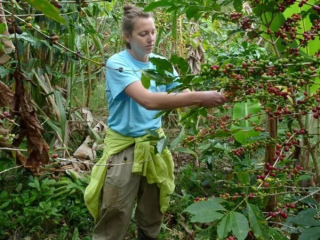
Following caf é (Wechat official account vdailycom) found that Arabica Coffee Tree, which opened a small shop of its own, was first introduced to Ecuador in 1952, and its coffee was of good quality, especially the coffee harvested in early June. Ecuadorian coffee beans can be divided into Galapago

A brief introduction to the cultivation of balanced and refreshing Ecuador boutique coffee beans, geographical location, climate and altitude
In the mid-15th century, there were legends about enchanted mysterious islands among fishermen fishing in the western Pacific Ocean of South America. It is said that the islands can sometimes be seen clearly from a distance, but when the ship approaches, it disappears again; sometimes it looks like a galleon, sometimes it shows the shape of a witch. The fishermen called these islands Magic Island and thought it was there.

A brief introduction to the history and culture of the origin and development of Ecuador's boutique coffee beans with fresh taste
When it comes to Ecuadorian coffee, we have to mention Ecuadorian organic coffee in the Galapagos Islands. The Galapagos Islands is a famous tourist attraction, declared as a World Natural Heritage site by the United Nations Educational, Scientific and Cultural Organization (UNESCO). It is extremely rich in products, and organic coffee is a unique one of them. The local fertile volcanic soil, microclimate and other unique ecological environment

Unique flavor of Ecuadorian coffee flavor description of taste varieties and characteristics of boutique coffee
Ecuador is one of the few countries in South America that produces both Arabica coffee and Robbins coffee. However, as the land suitable for Arabica coffee trees is decreasing, the production of Robbins coffee is gradually increasing. The best Arabica coffee comes from the Andes, especially the Chanchagu Valley (ChanchamgoValley), which is divided into two mountains from the south.

A brief introduction to the description of taste and aroma characteristics of Ecuadorian boutique coffee with fresh and unique taste
Because of the unique role of the Galapagos Islands in the course of history, the Government of Ecuador has designated the Galapagos Islands as a national park, the land is no longer allowed to be reclaimed as new agricultural land, and the introduction and use of chemical fertilizers, pesticides, herbicides and other chemicals are strictly prohibited, so coffee produced in the Galapagos Islands is recognized as a natural product. Well-known brand in South America, Ecuador A

Ecuador Vicabamba longevity village coffee production area profile What flavor characteristics taste
Professional coffee knowledge exchange More coffee bean information Please pay attention to coffee workshop (Weixin Official Accounts cafe_style) Everyone wants to live a long life. According to the international research organization on longevity, there must be more than 75 centenarians per million population to meet the standards of longevity areas. The five world longevity townships identified by the International Society of Natural Medicine are: Caucasus and Pakis in the old Soviet Union

Description of Ecuadorian Coffee Flavor: an introduction to the treatment methods of Grinding degree and Baking degree
After entering Ecuador from Colombia, the Andes is divided into the eastern and western Cordillera mountains, with a high plateau in the north and a low plateau in the south, with an average elevation of between 2500 meters and 3000 meters. The Andes run through the middle of the border. The ridges crisscross, dividing the plateau into more than ten intermountain basins. The most important are the Quito basin and the Cuenca basin in the south. There are many volcanoes and earthquake frequency in the territory.

Floral and fruity Galapagos Coffee Bean Flavor Taste Aroma Description
This is where Galapagos Coffee is different, because the archipelago is located in a very special position, at the intersection of the Peruvian cold current in the south and the equatorial warm current in the north. Affected by the cold and warm currents, a small ecological environment has been formed locally. The climate here at 500 meters is equivalent to the climate of 900-1800 meters inland. This terrain is ideal for very hard coffee beans (SHB) with high acidity.

Introduction of Ecuadorian Coffee Flavor and Taste Manor production area characteristics of Ecuadorian Coffee Hassanda Coffee Garden
Ecuadorian cocoa and coffee beans Why did Mr. Marcolini choose Ecuadorian cocoa beans to make the world's top delicious chocolates? Here is a set of numbers to give you the answer. This comes from the charm of aromatic cocoa. Only 5% of the world's cocoa production is aromatic cocoa beans, which can make mouthwatering delicacies. In this precious place
A brief introduction to the treatment method of grinding degree and baking degree of fragrant Ecuadorian boutique coffee beans
Ecuador faces the Pacific Ocean, and near the equator, about 900km off its west coast, near the equator at 90 degrees west longitude, there is also a dependency of the Galapagos Islands (Galapagos Island), also known as Cologne, which produces the famous Galapagos coffee. In order to protect the natural ecology, the Ecuadorian government has designated the archipelago as a national park and banned the use of chemical fertilizers, pesticides and other chemical agents.

A brief introduction to the cultivation of Ecuadorian boutique coffee beans with fresh taste, geographical location, climate and altitude
When it comes to Ecuadorian coffee, we have to mention the organic coffee in the Galapagos Islands of Ecuador. The Galapagos Islands is a famous tourist attraction, declared as a World Natural Heritage site by the United Nations Educational, Scientific and Cultural Organization (UNESCO). It is extremely rich in products, and organic coffee is a unique one of them. The local fertile volcanic soil, micro-climate and other unique ecological environment, coupled with its lack of

Introduction to the characteristic manor of Ecuadorian coffee flavor varieties with mild taste
West coast: including coastal plains and foothills, high in the east and low in the west, generally below 200 meters above sea level, with some hills and low mountains at an altitude of 600 to 700 meters. Belongs to the tropical rain forest climate, the southernmost end begins to transition to the savanna climate. The average annual precipitation decreases from more than 3000 mm to about 500mm from north to south. The names of the provinces are as follows: Piccha, Asuai, Boliwal, Kania.